


Note: Everything I have written here is the fruit of many years of study and repeated readings of Eugene Gendlin’s book AProcess Model. However, the text reflects my own learning and understanding. It does not necessarily express additional layers in Gendlin’s writing. It is meant to make complex and innovative ideas more accessible and to support understanding. Nonetheless, it is not a substitute for reading the original—Gendlin’s book.
You arrive home… and here, imagine 3 possible scenarios:
- You prepare dinner with your family, sit down together at a set table, and eat peacefully while having a pleasant conversation.
- You get home, grab something quick from the fridge, and sit down in front of the computer to eat while finishing up something urgent.
- You get home late, and the food is getting cold on the table. Your family members are frowning and complaining, and you sit down to eat in a tense and unpleasant atmosphere.

In all three scenes, you were hungry. You had an implying to eat. In all three scenes, a meal arrived, and the act of eating carried the process forward. You are no longer hungry.
Here it is important to clarify: because we can feel hunger and the implying to eat, it means there is a stoppage. When there is no stoppage, there is flow, and we do not feel the implying. For example, when we breathe continuously, we do not feel the implying for air. In continuous breathing where there is no shortage of air, there is implying, but it changes seamlessly and goes unfelt.
When do we feel implying? When there is a stoppage—when something stops us from breathing. Then, we feel the implying for air very clearly. In other words, when the implying is felt, it is a sign that there is a stoppage, just like in this case of hunger.
After we eat, the feeding process is no longer at a stoppage. The implying is carried forward and changes because food has arrived. But here, a major question arises: what kind of implying does the feeding process have now?
- Is it an exclusive implying of the feeding process that stopped earlier and is now resuming?
- Or is it an implying of the whole body across all of its inter-affected (coordinated) processes?
A process that stopped and resumes—what happens to its implying?
Gendlin asks: when a process resumes (a feeding process resumes through eating), does it imply its own continuation on its own? Or does the whole body, with its inter-affected processes, imply the continuation?
In our example, does the feeding process that stopped and is now resumed by eating hint at and imply its own continuation? If that were the case, the process of eating in all three scenarios would be similar, because the feeding process itself implies the continuation, regardless of all other processes. The process of eating would remain separate from other bodily processes, even when resuming within different contexts.
The second possibility is that the whole body, across all its processes, implies the next occurrences.
As you may recall, a stoppage creates a separation between the process that stops and the whole body. When there is a stoppage, the stalled process implies what it lacks, separately from the body. But when what was lacking appears, the stalled process resumes. And again, the question is: is the implying for the continuation of the process coming from the process that stopped and resumed, or is it coming from the whole body?
In the conventional model, we tend to treat every life process as a process unto itself. But at this stage of entering A Process Model, we can understand that the whole process (the body with all its intertwined processes) implies the next occurrence of the inter-affected processes. We wouldn't want to assume that each of the inter-affected processes hints at its own sequence of events. These are not independent processes standing on their own. The body in its wholeness (all the other processes, as well as the one that stopped and resumed) implies the next occurrence of the inter-affected processes and the occurrences that follow. The process that stopped and resumed, and is now inter-affected with all the rest, does not imply its own continuation by itself. The entire whole body (all other processes plus the one that resumed) implies the next events.
Implying is always a single implying of the whole body.
The meaning of a single implying at dinner
In all three situations above, eating occurred, and the feeding process that had stopped was resumed. Hunger was replaced by fullness. Yet, the process that resumed in each of these situations implied a different sequence of eating, a different sequence of life.
Our whole body consists of many processes, but they are inter-affected. Eating pleasantly with family is fundamentally different from stressed eating next to the computer to keep working. The sequence of eating stems from the wholeness that creates it, that implies it. The process of eating does not stand alone, separate from other life processes. Therefore, it does not imply its own continuation by itself. The moment the process of eating resumes, it is already part of the whole. It is inter-affected with all other processes in the body.
There is only one implying for the next step, and it is the implying of the entire body across all its inter-affected processes. The feeding process in the situation of stressed eating in front of the computer affects, is affected by, and is inter-affected with the worry, stress, mental concentration, alienation, and fatigue. On the other hand, in a different situation, the process of eating affects, is affected by, and is inter-affected with the joy of returning home, the delight of sitting with the whole family, home-cooked food, warmth, a relaxed posture, etc. In each of these situations, eating is inter-affected and intertwined with other life processes, and it is impossible to experience it in isolation. There is one implying for the whole body.
A whole implying of a little lamb
Gendlin brings an example based on an interesting study. The study demonstrates the principle of the body's inter-affected processes—even processes that seemingly appear unrelated to one another.
When a young lamb takes its first steps, it does not stop before a cliff and might fall into the abyss. After a few days, when the "perceptual system" develops enough, the lamb stops at the edge of the cliff, even if it has never seen a cliff before, and even if its eyes have been covered since birth.
The interesting finding of the study was considered very surprising. When a lamb is separated from its mother from birth and raised completely isolated from her, its "perceptual system" is impaired. At the age when lambs usually stop before a cliff, a lamb separated from its mother will not stop.
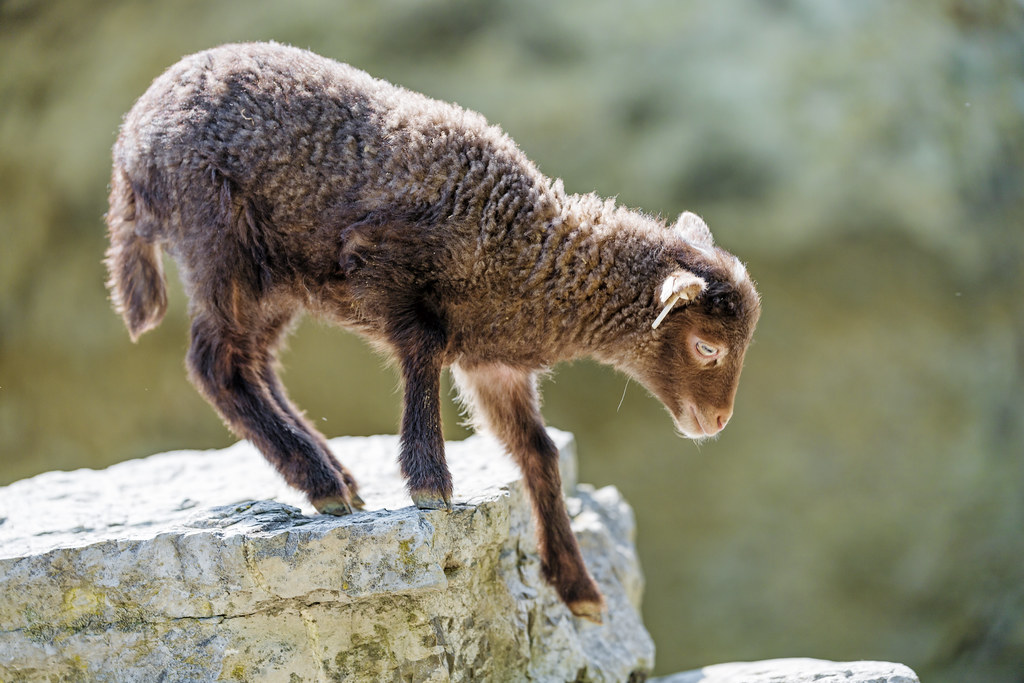
This study seems surprising. The underlying assumption in the conventional model is that there is no connection between the development of the perceptual system (vision and depth perception) and the development of the reproductive system (the bond with the mother). It sounds logical to us that a lamb raised apart from its mother would not develop normal sexual instincts in adulthood—because we are talking about the same system. But there seems to be no logic connecting early development alongside the mother to perceptual and motor processes.
Yet according to Gendlin, implying is always of the whole body—a single implying. Processes are not separate. The implying of the whole process implies the next occurrence of the body.



I'd love to read what you thought: